Tuesday, August 22, 2017

Silence and Stillness


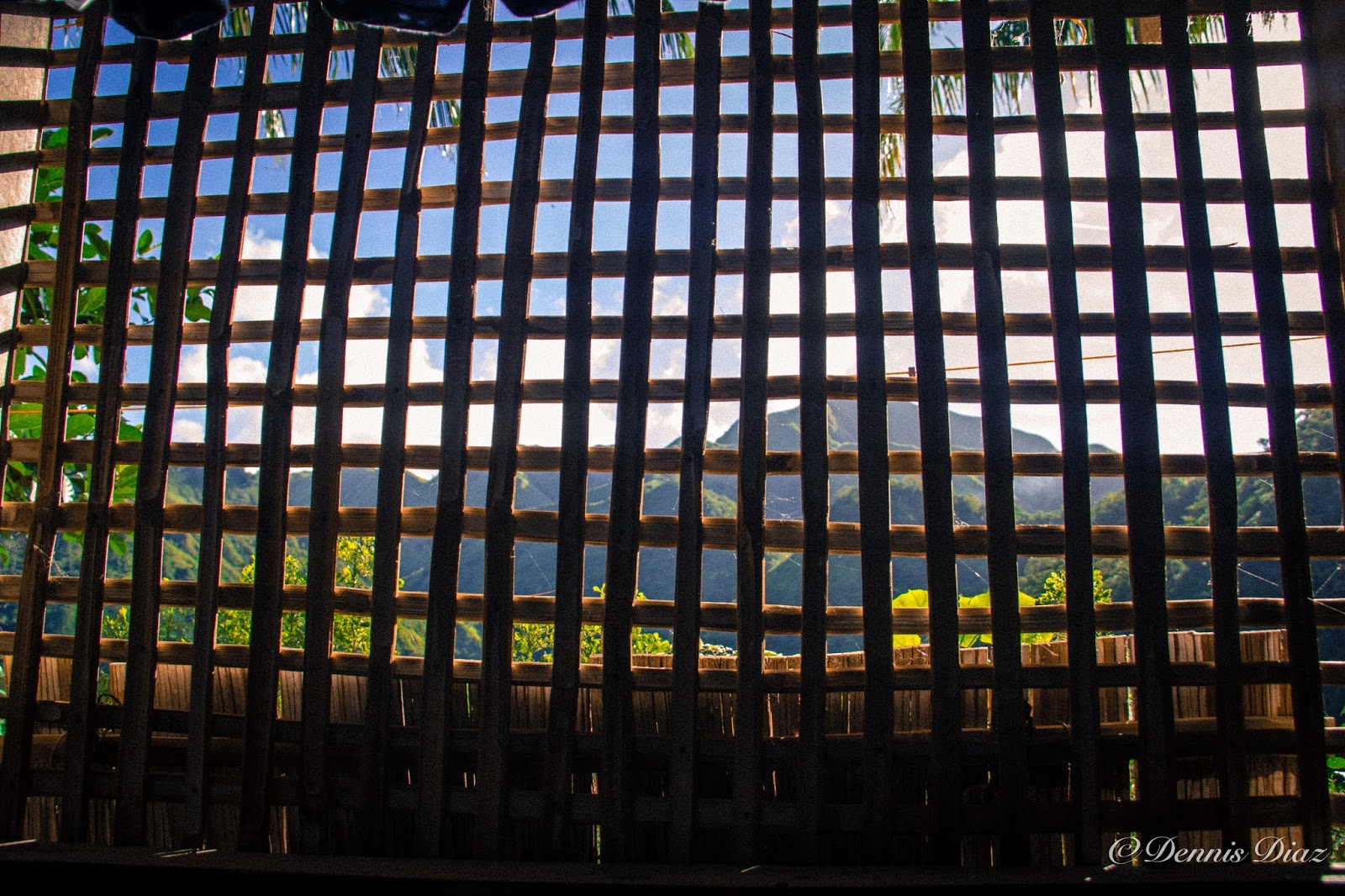
The sound of boiling water, the smell of coffee, the sunrays bursting through the bamboo shutters. Silence. It’s not a complete absence of sound. Not like the kind you get when you shake an empty shoebox. It is a calm, serene moment. It is a quiet that hovers around during daybreak. It is a slight chill touching the face and offering a soft hug. I crave mornings like these.


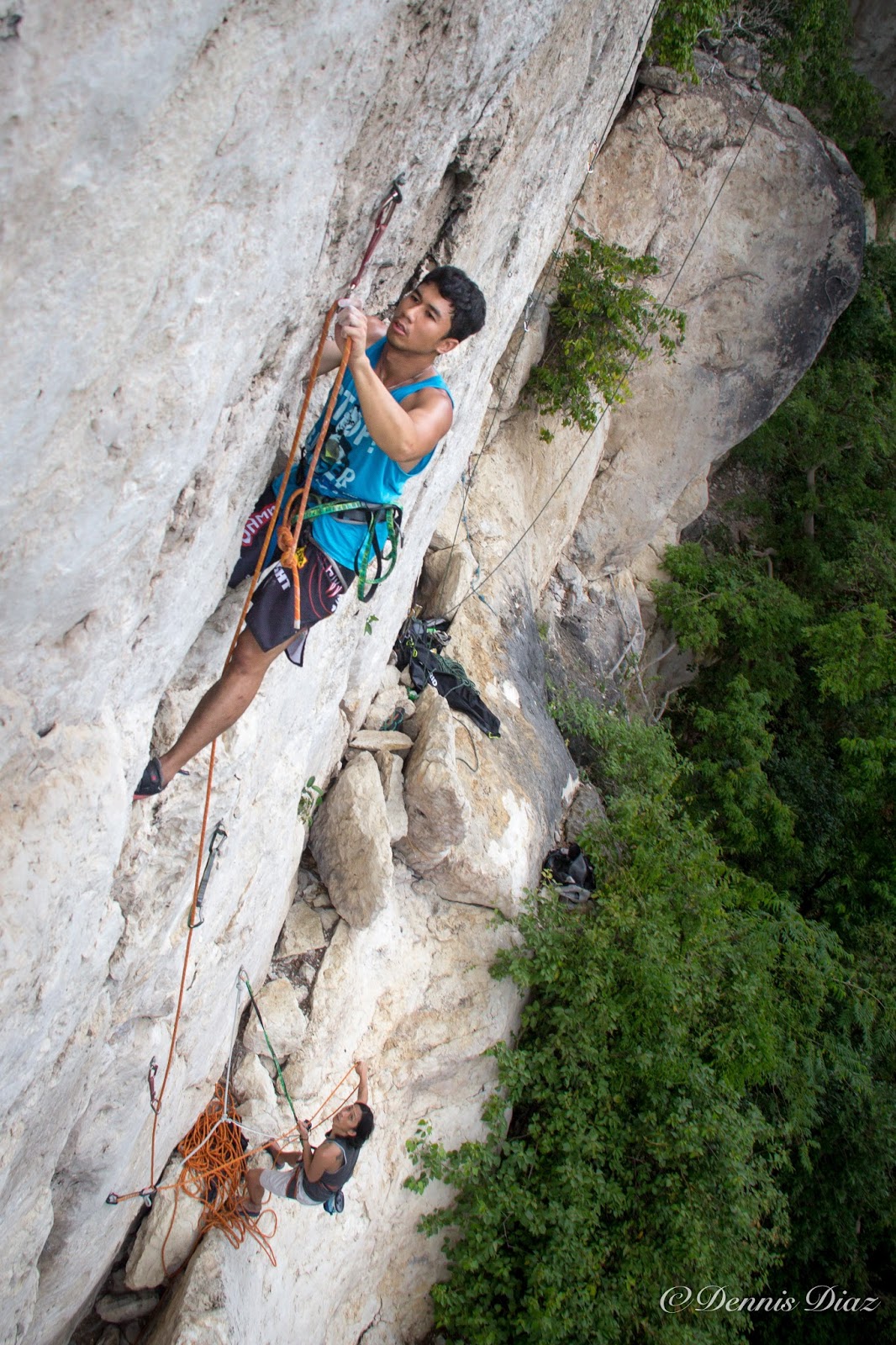
A breath, a voice, and happy faces set to start off another day. Coffee touches my lips, my tongue, and my throat. It’s not that hot. Some find it so but not me. I like it like that. The heat adds this certain sweetness to my no-sugar-coffee. It's a natural sweetness within the bitters. It's a sweetness that vanishes as coffee gets colder. Better drink it while it’s hot. I like natural, like the kind you get when out climbing on rocks. Just like hot coffee, climbing has this certain sweetness even though it punishes the fingers and the body especially when pushing above your limit, but I like it like that.


I stare at the dark streaks running down the white cliff at a distance. A swirl of steamy clouds from my cup partly obscures my view. There isn't a name given for the cliff we’re headed. It is in Igcabugao, Igbaras in Iloilo. When asked where to, we say Igbaras and it is understood amongst climbers where exactly. Though there is another crag by the river, the main climbing area is the one towering above a landscape overlooking the small valley. It is always the focus of all climbing trips to the area.


Quiet, peaceful mornings are rare and when they come, they last just seconds. Infrequent moments like these are plenty in Igbaras; wake up each day and lavish yourself in them. Time slows down and the many voices drowning you tune out. Instead what you hear are your breath, and long, deep primal screams that prove your existence. “Yes, I am here, I exist, I am real,” and the echo from the valley bouncing back every grunt you gush out as you hold on to smaller and smaller holds gives you the impression that you’re not alone in your struggle. There is a comfort in hearing your own voice shouting back at you, urging you to keep going. It seems like a violent struggle but its not. Behind the loud ear splitting thunder of your own voice is a focus sharper than any spear. Behind it is a peaceful and graceful acceptance of what comes next. 


Soft notes playing on a guitar, firewood crackling and giving off warmth, and the glow of the moon on our skins. Stillness. No, it’s not a complete absence of movement like water turned to ice. It is a tranquil, hushed moment. It is the quiet of leaves moving with the sleepy wind. It is the slight warmth from the fire. I crave evenings like these.

Photo by: Jaime Uy

Sunday, January 22, 2017

To redpoint or onsight, that is the question

What do you like better, onsighting or redpointing?  It is something we don’t usually think of or put effort categorizing ourselves in but it does find its way into conversations specially between new found climbing buddies. Elaborate answers get interesting especially at the end of the climbing day when everyone sits around for beer. Juvenile as it sounds, the slight push of the question, a couple of beers, and a savvy way of dishing out the question might find you within a lively worthwhile ‘get-to-know’ experience between you and your new buddies.      

Enrique Caballero on an onsighting spree on the "Partymeile" wall in Thakhek
I would like to share little bits of my personal takes on both and my own preference. Sadly I’ve no bottle of beer in hand and so I urge you to get your own, drink one bottle, get another one before reading further, and then gulp swigs at a time at the end of every sentence you read from this point on.

Thai National Sport Climbing team member, Mean, finishing her own project on the "Partymeile"
It is important to understand that whatever answer one gives this question does not give heavy meaning to one’s definition of one’s self. Or does it? Just kidding. After two beers, we don’t do psychological profiling of the people we just drank with, right? Or do you? Anyways, before going further let me just enlighten some of you to what “onsighting” and “redpointing” is in case you end up in such a conversation and prevent you from turning the whole thing academic as to answering “What is onsighting and redpointing?” 

Kat prepping for a hard redpoint with a proper warm-up on the "Partymeile" wall.
Onsighting is climbing and finishing a route or boulder problem in one push on the first try with no falling off, beta or prior information about the crux, the moves or any kind of advice on how to solve it. What if you’ve seen someone climbing it even if you just happen to glance upon it and saw someone on it? Sorry, then you would’ve lost your chance for an onsight. You can turn around and pretend you didn’t see or run off to some other crag and hope no one saw you looking at it. What if you just overheard people talking of the moves? Again, sorry, you just blew your onsight attempt. How about obvious chalk marks and rubber marks? Hmm, see, it gets even more complicated.

Onsighting needs rests. Sometimes it's a bonus when rests are immediately after a hard crux. 
Your next option is for a “flash,” that is climbing on the route and finishing it in one go on the first try but already with prior knowledge of the moves. Quite strict ‘ey? Well, it gets blurry still, but to keep it simple, onsighting is really pure. It is a climb untarnished by any kind of influence. It maybe like meeting someone who catches your full romantic attention for the very first time and trying to get to know them just with your own ‘techniques or styles’ with no clues whatsoever, no spying, no gossip, no nothing and end up with a homerun. How pure the pursuit becomes will be entirely up to you. The less clues you have the closer your attempt will be to the purest meaning of “onsighting.” The more clues you have the closer your attempt will be to a “flash.”

Enrico flashing "Small World" at the great roof of Thakhek.

Redpointing is climbing and finishing a route or boulder problem in one push but only after your first attempt fails. It could be your second, third, tenth, or even more than your hundredth attempt. The point being you finished it and it’s all that matters. It has a far simpler definition. You can exhaust all manner of research on it or learn from all your previous attempts so that you solve the puzzle. In the end it will still be you who executes what you know.

Enrique checking out "The Jungle King" 

Onsighting and redpointing each have their own endearing points to which we can find ourselves attached to. Some will say they equally like both. Don’t give up easily on the pursuit of the argument. For the sake of good beer and longer conversations there is should be no neutral ground. There will always be a direction to which everyone would naturally lean towards.

Flo on his project. "Dans Dyno"

(This is the part where you should have consumed almost two bottles of beer. I would be utterly disappointed if you haven’t already by now.)

Both onsighting and redpointing have equally appealing characteristics but in the end we find ourselves enjoying the process of one more over the other. I myself lean towards the latter. It is not to say that I do not like onsighting because I do but simply, my mind rests easy on redpointing.

When a project turns into a redpoint.
Redpointing allows me to casually discover my weaknesses. It is climbing where mistakes are easily forgiven. Once you fall off a route, you can immediately try again. It also allows me to climb things that are far from my limits and push myself over them. Personal barriers are challenged but attachment to the final outcome fall second to the overall process of getting there. Redpointing allows me to let my fingers bite down as hard as they could to the point of bleeding, to let them heal, and to wait long for the body to recover before trying again.
Lena warming up on the crazy 3D climbing in Thakhek's great roof.
Onsighting on the other hand is a far less forgiving type of climbing. You get one go, one try, and one crucial mistake for your attempt. After which it won’t be the same, no second chances. It does provide the chance to engage in intense focus and calm. It demands all the ounce of pragmatism in your mind and body as you literally inch closer to every hold on a route. The experience isn’t like any other. Every inch gained along the way feels like a milestone in itself. An onsight is a once in a lifetime offer and for that it has a special premium that is unexplainably gratifying.

When your projects destroy you there's still onsighting but on far lower limits. Photo by Scott Hailstone.
I enjoy redpointing more than onsighting. I like the casual nature of redpoints and the feeling of being not too attached to the outcome. I want to feel a special relationship to a route and go through the process of destroying my body on it, understanding what needs to be done, calming myself, and finally climbing and finishing it when the right time comes.

In the end both redpointing and onsighting requires 120% effort all the time. It’s all about setting a goal and going for it. There will be slight differences to strategies but in the bigger picture we all somehow have to move on. If not, it will be like reading the same page of a book over and over. The learning comes to a halt, and we begin failing to accept new things as we go our way.

Tuesday, December 20, 2016

Choosing the Katana

Among the archaic weapons that laced the epic duels of feudal Japan none epitomized the greatest contest more than the katana versus the jo or the short wooden stick. The story of the meeting between the sword wielding Miyamoto Musashi and the jo handler Mus Gonnosuke still etch vivid scenes that remain in my mind. Musashi lost that duel. The elegant, hard-edged, and sharp katana was defeated by the simplicity and balance of the jo.

Wielding bokken to practice movement based on the sword 

I once questioned the outcome of that duel. How can a weapon made of steel with razor sharp edge be defeated by a blunt wooden stick? What are the strong points of each weapon and what disadvantage can one have against the other? Which one would I actually choose if I were to be in a duel set in feudal Japan?

It is hard to choose between the katana and the jo. Both weapons possess elegance and versatility. The manner by which they are wielded are different yet in my study of Aikido, a martial art grounded in the movement of both these weapons, I’ve come to learn certain similarities. Still, they do posses certain advantages and disadvantages over the other.


The katana is made of steel, forged and formed by master blacksmiths. It’s made of a material most definitely stronger than wood and Japanese masterful craftsmanship makes it no ordinary sword. It is made to perfection. It is light and can be made to deflect and cut at the same time. Its razor sharp edge can cut through wood and human bone and its point is just as lethal if not more. A learned swordsman wielding a katana is a deadly force. Still, it is a one-sided weapon; it has one sharp edge, one sharp point, and usually rests on the left hip so that the right hand will be the one to control it with the left hand used for delivering power from the very end of the hilt.

The jo on the other hand is a considerably longer weapon thus having advantage over reach. Its well-balanced construction allows both ends to be made to thrust and deliver powerful blunt edge strikes that can quite easily crush or break bones. The power of the jo also lies on its versatility to be used symmetrically.  That is, it has no preference from which side of the body it’s going to come from, which hand to use for control, and which hand to use for power. A master of the jo can hold the entire length of the weapon at any point giving him a flexibility of attacks and defense that becomes harder to anticipate. 

A martial art based on the use of sword and jo techniques; Aikido emphasizes deflection or redirection rather than blocking or stopping movement. Needless to say there is a way to deflect the cutting edge of a sword. A jo is useless to block a katana but it can deflect it. With the greatest advantage of the katana, that is its edge, nullified by skillful deflection, the jo gains the upper advantage. It’s not hard now to imagine why Musashi lost to Gonnosuke.


Every technique is based on sword movement 


That said, would I choose the jo? No. I would still choose the katana. It would be for the reason that it’s not an ordinary weapon. The amount of craftsmanship that goes into its making and the mere fact that it remains sheathed until there is no other option but to draw it out makes it elegant and a civilized weapon. The question about winning the duel still looms. There is a bigger chance of losing if I choose the katana over the jo but I’m not saying I’m ok with defeat. Perhaps I’m saying I’m willing enough to struggle against the odds. I’m saying, yes give me that beating but I won’t give up. I choose the katana, win or lose.       

Monday, December 19, 2016

Which do you prefer?

Which do you prefer, short powerful bouldering or long sustained savvy lead climbing? It’s a question some of us might have been asked more than a couple of times and it’s probably one you’ve used yourself as kindle for conversation with climbers you’ve just met. It’s not one of those ranked high in the list of opening gambits you dish out after short introductions though. Might be best reserved after a few exchanges in belays or after a few times switching roles as spotter and climber. 


It can be used whether you guys are lead climbing or bouldering. It’s up to you how to mash it up. You can also throw in leading questions too. You can ask, “Do you also lead?” or “Do you like bouldering too?” There are many permutations to this line of questioning. But fear not because there is only a limited number of ways that it can be answered. When asked for a preference there can only be: “I prefer bouldering,” “I prefer lead,” or “I like both.” To which you can spin off your own preference or just ask the old reliable “why” and just follow through.

It takes a bit of sensitivity to pull it off, however. You have to think about the timing, the place, the mood, or the grade of the sport route or the boulder problem. Remember the point of the question is to give a warm welcoming vibe but not too much that you sound like forcing the issue or being creepy.


So, what do you prefer, bouldering or lead climbing? I like both. I wish I could have done more bouldering though during the last trip to the north. There’s simply too much still waiting to be discovered in Ambongdolan and Camp 3 along Kennon Road. In the meantime there are just photos to remember the place by. At the same time I’m looking forward to tons of lead climbing in the following days.